The worst advice I’ve ever heard about writing books
November 26, 2014 by Dr. Letitia Wright
Filed under Books, Crowd Funding, Front Page
The worst advice I’ve ever heard about writing books!
The worst advice I’ve ever heard about writing books begins with the assumption that writing the book is the only reason for the writer to complete the book. Most writers have an idea of what they want to accomplish with their book. Some reasoning is transparent, like entertainment or information. In most cases the author wants their book read by as many people as possible. This brings into play a whole galaxy of “must-do things” that goes beyond finishing the manuscript.
Few people write books just to see their name in print. For those few people, the Internet offers a broad array of publishers and prices, more precisely printers, eager to fulfill the need. However, entertainment and information requires mass penetration of the probable market for whatever the topic covers. In these cases, beginning at the end can be more appropriate. Developing and refining an audience for the book, starts the journey on a successful path.

So, some of the worst advice begins with the phrase “just do it”regarding actually writing the book. Thinking through why you want to write the book is just as important as the pen or the keyboard. The next most valueless point assumes you have already written the book, so you must get a literary agent. Now a whole new toolbox comes into active use.
To get a literary agent you have to write a query letter and a proposal. A query letter has one purpose, convince the recipient to look at your book, giving you a better chance of selling it. The query letter is a sales tool, a sales letter selling your book. Yes, it gets deeper.
Writing a successful query letter involves analyzing your manuscript and writing a compelling synopsis. A synopsis is not a step-by-step description of what happens, but the emotions that accompany the actions, fear, hope, excitement, and disappointment presented at each turn of the events. Here the use of your writing talent may have to be tweaked to illustrate your marketing and salesmanship. A problem, if this is not one of your strong points.
Next, your proposal letter should be the result of research that identifies an audience for your manuscript. Again, not a step-by-step description of demographic labels, but a compelling argument matching the essence of your book to the needs of a targeted segment of your probable audience. Unless your book is about “marketing psychology” this may severely tax your patience.
Once you have secured an agent who then snares a publisher and more money, you need to determine what you need the publisher to do that will propel your book to the best-sellers lists. The more expensive publishers often have a marketing package on hand for the client. Instead, you may have to suggest a social marketing plan to support your work. What makes this part of the “bad advice collection” is that a writer is seldom necessarily a social marketing campaign designer.
The core point of this journey down “the rabbit hole” of becoming a published author, resides in the fact that the gift of the author is on the written page. In this high-tech low-touch society, delivering your artistic gift to the public, requires a completely different skill set than that of a talented author. In fact, best sellers are grown, they don’t just happen under the rainbow of “write it and they will buy.”
Reject the worst advice you’ve ever heard about writing books, open your thinking to an exciting new approach to publishing – one that starts with the end that in mind. Why not sell your first thousand books before you have written a single word?
The time is now and the choice is yours, take action – turn the page, today.
Blabcake Messenger
November 25, 2014 by Dr. Letitia Wright
Filed under Front Page
Blabcake Messenger brings the text messaging experience to a new level. Literally, a new world of expressions is now available in the messaging world. These sensors on iOS and Android smart devices, create an opportunity to bring a lot of real world interaction into the digital messaging space.
Emoticons evolved to gave writers the opportunity to express an emotion, and gave readers the opportunity to better understand the tone of the written communication that they have received. Blabcake Messenger takes that idea and extends it further. Sending a text saying “let’s get drinks tonight” doesn’t give as positive of a feeling as sending a text that has blown kisses from blowing on the phone. The value needs to be considered from the perspective of the person who uses Blabcake Messenger, as well as the person who receives the “felt gesture.”
With Blabcake Messenger, users can throw ninja stars by shaking their phone, and show their love by placing the phone to their hearts. These are just a few of the endless possibilities that Blabcake brings to the world of texting. With Blabcake Messenger, you can do things to others that were not possible before in messaging. Examples include: hugging someone by hugging phone, kissing someone by blowing a kiss at the phone.
Much of the push to visual communication (Snapchat, Tumblr, emoji) is driven by the simple fact that most people actually don’t have much to say. Keep in mind that this is true whether we’re talking in person or on the web. Most of real-world communication is conveyed via body language and facial expressions.

Blabcake
You can high-five a friend a thousand miles away. Kiss someone goodnight from another room. Have you ever had the uncontrollable urge to turn someone into a cupcake? Now you can, and use your imagination without restraint. Throw ninja stars, blow bubbles and even rock out on the guitar. Blabcake transforms your smart-phone into an extension of your body and lets you speak when words aren’t enough.
Blabcake Messenger has hundreds of accessories for your berry in the Blabcake Shop and 23 different animated moods to choose from; you can always be who you are and say what you feel. Texting only lets you send a message, but with Blabcake, the possibilities for fun are endless. It’s time to step-up to the next-generation of digital messaging, Blabcake Messenger – words you can “feel!” Visit the Blabcake Messenger site, today!
A large, empty text box can leave the impression that any comment has to be insightful and constructive. The result has grown the popularity of like buttons, seemingly a more appropriate way to express simple emotions like, ” Good job!” or “I agree with this.” While more aligned with person-to-person communication, Blabcake messages act as a kind of midpoint between a “like button” and a longer comment, allowing users to add more emotional weight to what they say or feel.
You can find the app here
App Store: https://itunes.apple.com/us/app/blabcake-messenger/id809118479?ls=1&mt=8
Google Play Store: https://play.google.com/store/apps/details?id=com.walkingthumbs.bcapp
The History of British Television
November 24, 2014 by Dr. Letitia Wright
Filed under A Note for You, Front Page
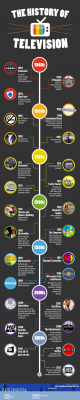
Infographic: The History of British Television
No invention has impacted human life as much as the television. While the Japanese hold a reputation or being the most technically advanced country on the planet and certainly lead the way with regards to television innovations, it’s the British who deserve most of the credit. Long before smart phones, tablets and even home computers, British-born inventor John Logie Baird created the world’s first mechanical television in 1925. While he wasn’t the first to propose the idea, he was the first to create moving greyscale image – which had a scan rate of a mere 12.5 pictures per second. During subsequent years he significantly advanced the technology and even managed to transmit a long-distance signal from London to Edinburgh (438 miles) through a telephone line in 1927.
But early history aside, the real history of television began decades later in the 1950s when it started to become a feature of the everyday home. During this time there were an abundance of innovations regarding analogue and digital technology, which paved the way for trends that are still present in the industry today.
1950s and 1960s
One of the first British television broadcasts was the current affairs programme Panorama, which is still one of the BBC’s most prized possessions. The 50s and 60s also brought us Blue Peter and the Apollo 11 moon landings. One of the most innovative shows of the time was Coronation Street, which is often credited as the first mainstream soap opera. It started in 1960 and was originally scheduled for only 13 episodes; however, even today it remains to be one of the most popular shows in the UK.
1970s and 1980s
During the 70s and 80s Hollywood started making its way to television screens. Movies were no longer reserved for the cinema and British terrestrial channels started to create single drams and mini serials. During the latter half of the 70s the video recorder was invented, which at the time was one of the most noteworthy innovations in the industry. In the early 80s the largest ever broadcast was aired – the wedding of Princess Diana and Prince Charles.
1990s and 2000s
The late 90s had the biggest technical innovation in the industry since the video recorder; the broadcasting of digital widescreen. In just over a decade this would phase out the old analogue models for good. In the 00s two of the most iconic television sitcoms ever created were launched, The Office and The Inbetweeners, which would go on to be remade in countries all over the world. This solidified Britain’s position at the forefront of creative broadcasting.
2010s and Beyond
Major changes occurred in the 2010s to the way we watch television. With the creation of online viewing platforms such as Netflix and Love Film, the whole industry moved portable. Now smart phones, tablets and laptop computers can access all of the latest television shows and movies anywhere in the world. This major change also caused a shift in the creative process. Many new television shows and movies are now “download only”, which has helped independent production companies find distribution and exposed the world to even more material.
ADS Digital have compiled a detailed infographic covering the history of British television programming since the 1950s. From the timeline we can see just how much the British television industry has influenced the world.