Perception of financial planners slowly improving
July 23, 2013 by Dr. Letitia Wright
Filed under A Note for You, Featured Articles, Front Page
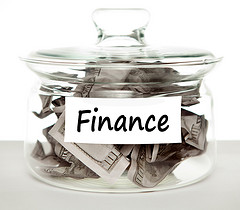
Finance (Photo credit: Tax Credits)
Perception of financial planners slowly improving
by DONNA SADDLER
Financial planners are being better perceived by clients but there is still history to overcome.
Financial planners aren’t bad: they’re just misunderstood. Financial planners are, like lawyers, one of the professions consumers disdain.
Long pilloried as being the used car salesmen of the financial world, there is widespread confusion in the minds of the public about the role financial planners play.
Consumers often think financial planners are untrustworthy, lacking in qualifications and only in it for the commissions attached to the products they sell.
In reality, what financial planners do is help each client meet their financial goals, taking into account individual circumstances and aspirations and the options that are available to them. They do not have a nanny role to help the client abstain from acquiring conspicuous goods, but they offer advice regarding bigger expenses.
Part of the reason the industry attracts such flack is that although many financial planners are honest and reliable, the whole industry has been tarnished by the behavior of a few bad apples.
Recently consumers are becoming more satisfied with the work of financial planners. Recent research shows that one third of respondents had noticed an improvement in the overall quality of advice given by their financial planner.
Although these results show a positive improvement in consumer satisfaction levels concerning advisers, financial planners cannot rest on their laurels.
There are still issues with the level of complexity of information contained in financial documents and that financial planners are still facing a trust issue.
The industry has a long way to go to cut the wheat from the chaff; lots of guys have got fat and happy based on the growth of the industry, without providing the advice that clients need.
There are also problems with financial planners not taking enough of an interest in their clients.

Large Bridging Loans for UK Businesses
July 21, 2013 by Dr. Letitia Wright
Filed under A Note for You, Featured Articles, Front Page

Loans (Photo credit: zingbot)
Large Bridging Loans for UK Businesses
by SEOCOMP
All UK business needs to have the resources to help them be successful in whatever industry they are operating in. It is for this reason that there are large bridging loans for UK businesses, to help them make the right investments and to increase the cash flow. In the present, there are a number of lenders who are willing to offer businesses in the UK a variety of large bridging loans for their investment needs- all the business need to do is research and select the one that offers them the best rate.
Reasons to choose Large bridging loans
• These large bridging loans are a source of money to help UK businesses carry out different investment ventures. It can be used to bridge the gap between selling one property and buying another or to fund purchase of properties for renovation, among others.
• As compared to the typical business loans, the large bridging loans are less risky. This is because the typical loans come with fluid repayment terms, increasing the chances that the business mat fail to meet the end of the bargain.
• These loans are for shorter period, making it a great options for the UK businesses that have set time to increase their cash flow. With these loans, the businesses are able to deal with problems that may arise or take advantage of opportunities that are available at times of the month when they do not have adequate cash flow.
• These large bridging loans are flexible, in that the lenders have an option of issuing the loan on various assets of the company. Lenders may choose to issue it against the capital investment of the business, the stock acquisition, venture capital. This makes it easier for the business to get the loans of their choice, because they are not limited to a specific asset.
Choosing Large Bridging loans providers
UK Businesses have the option of selecting any type of provider of these loans, but to get the best rates, they need to take their time in choosing them. For starters, they should ensure they have found out about the companies that provide large loans, and compare a number of them.
The advantage is that there are a variety of sources where UK businesses can find these providers, both online and off line. Whichever the source, they need to select the companies that are reputable, with many year of experience in offering these loans. They need also to investigate the rate at which these large loans are offered as well as the speed at which they are made available. Additionally, they must ensure that they are dealing with a company that is transparent and trustworthy, to avoid inconveniences at a future date.

2013 3 Ways To Prepare For a Financial Disaster
February 1, 2013 by Dr. Letitia Wright
Filed under A Note for You, Featured Articles, Front Page

English: Me Reading the Financial Times (Photo credit: Wikipedia)
So we’ve survived the Mayans’ apocalypse predictions and 2013 is looking rosy, except that is, for the dreaded bank balance. It’s especially necessary to focus on getting this in order for 2013, as banks are less and less likely to bail people out if financial problems are growing. Tackle your financial worries early and follow these 3 steps to prepare for a foreseen financial crisis.
1) Get Your Finances In Order
First things first, you need to know what you’re working with, so getting your finances in order is essentially the first order of business. Start with your bank balance now and work out your monthly and weekly expenditures. Look at your income too, what are you earning and what are you spending, this will help you work out step to, which is of course…
2) Cutting Back
No doubt you’ll have noticed some things which don’t quite tally up in the way they should, perhaps you’re spending money on a gym membership you no longer use, or the odd £20 0r £30 spent on nights out, clothes or trips that you could really do without, yes clothes are things you can live without! Why not try a month on month off trick of the mind, so you’re not actually forced to give up everything all at once, because we all know that if forced to give something up completely in one go, we’re exceedingly likely to fail – remember chocolate at lent? In the first couple months of the new year why not try going a month without buying anything material – this could mean clothes, cosmetics, jewellery, games, you name it, but you can purchase nice food and dinner out, all be it occasionally. Next month try the reverse, sparingly of course, once you’ve got the hang of this little alternating trick it becomes much easier to cut back all together in the following months – it’s the best way to wean off shopaholics for sure.
3) One Day Work
There’s always something you can do to make money if you have a bit of spare time, so why not dedicate an evening or two to mystery shopping, where you could be paid to go to a restaurant and write a short review or the food and service. There are also on-line surveys that pay cash and lots of websites where you can offer up your skills on a daily basis to make a bit of extra cash, all it takes is a bit of spare time.
You never know when a financial disaster could hit in 2013; make sure you’re prepared by reading these four tips to staying on top of your finances and avoiding a financial melt down.
Author Bio | Geoffery is a personal finance blogger in the UK. He specialises in the short term loans and finance market, he works closely with sites like Wonga (wonga.com/about-us) – a digital finance company in the UK.